Camera Technology and 3D Aesthetics
How technical choices shape the space and feeling of stereoscopic cinema
stereoscopic 3D, camera technology, cinematography, focal length, interaxial distance, 3D aesthetics
The article is also available as an e-book through Kyobo Book Centre, as announced by Kwangwoon University’s 3D Film Lab.
0.1 Abstract
When planning stereoscopic 3D movie productions, the choice of camera technologies ranges among the most frequent questions. Operators, directors and producers often request a complete and universal system to solve all technical challenges in stereoscopic 3D shooting situations.
The present article aims to explain the principal challenges in the perception and representation of stereoscopic 3D movies. The purpose of this article is to increase the understanding for different technical solutions and to help in the choice of the right technical equipment for a given artistic and creative application.
1 Introduction
The evolution of stereoscopic 3D technology has seen several waves of popularity increase and decline. The interest to the technology started together with cinema. The Lumiere Brothers successfully developed and commercialized their camera technology and contributed substantial research to stereoscopic technology1. The technology of the polarizing filter in combination with silver screen marked a big wave of Hollywood 3D movies after the World War II However, this wave ended almost as fast as it began after a couple of years. Technical improvements lead to a revival of stereoscopic cinema only from 1960. As in the previous wave the technology did not prevail. The digitalization of commercial cinemas in the early 2000 allowed again a revival of stereoscopic 3D. The long awaited digital projection technology delivered stereoscopic images in unprecedented quality. In this era one of the most successful movies of all times the 3D movie Avatar set new standards in mainstream stereoscopic cinema. However none of the succeeding stereoscopic movies was able to match its success and box office; and although the technology is now widely present, stereoscopic movies are in declining phase repeatedly.
In previous decades technical deficiencies have often been mentioned as cause for the decline of stereoscopic movies. As most of these technical deficiencies seem to have been overcome by the present digital projection technology, and in research such as in the prediction of eye-strain2, it is discovered that the reasons seem to lay elsewhere, in the taste of the audience or in the preferences and the budgets of the movie makers.
The present article aims to highlight several physiological and aesthetic issues that are often a consequence of technical choices and that are left behind when stereoscopy in 3D movies is merely considered a technical feature. The following discussion does not claim to be an exhaustive analysis of the phenomenon, but reflects recurring questions and decisions in years of experience and in collaboration with movie directors and cinematographers.
This topic can be divided into two separate aspects, which seem to influence the development/creation of most stereoscopic 3D movies. The first one refers to the influence of stereoscopic 3D on the story and the work of the director. The second one identifies the look and aesthetics of the stereoscopic movie as a consequence of technical decisions.
1.1 Stereoscopic 3D Aesthetics in Directing
Many stereoscopic 3D movies seem to have a common issue. It is a type of directing related specially to the fact that the movie is a stereoscopic 3D movie. Among film makers and also among audiences a discussion that never seems to stop relates to an unspoken question: Why was this movie made in 3D? Unlike many other technical features such color, sound, high frame rate or the aspect ration, a special attention is directed to the technical aspect of stereoscopic 3D. It seems that all stereoscopic 3D movies need to prove and justify why they have been shot in 3D. This justification makes it into the story and the screenplay. It can sometimes lead to grotesque and ridiculous actions where the director or cinematographer is finger pointing the use of stereoscopic 3D technology to his audience. This special attention can be gratifying for a first time viewer, it seems patronizing and superficial for an educated audience.
An example of such a 3D justified scene can be seen among others in the movie “House of Wax”, when an actor is long and intensively playing with a jokari rubber ball game. The audience grasped the setup of the scene only after a couple of seconds, but the movie performs a “milking” of effect of throwing the rubber ball repeatedly in the negative parallax and making it jump out of the movie screen into the audience space. Figure 1 shows a still of this sequence.
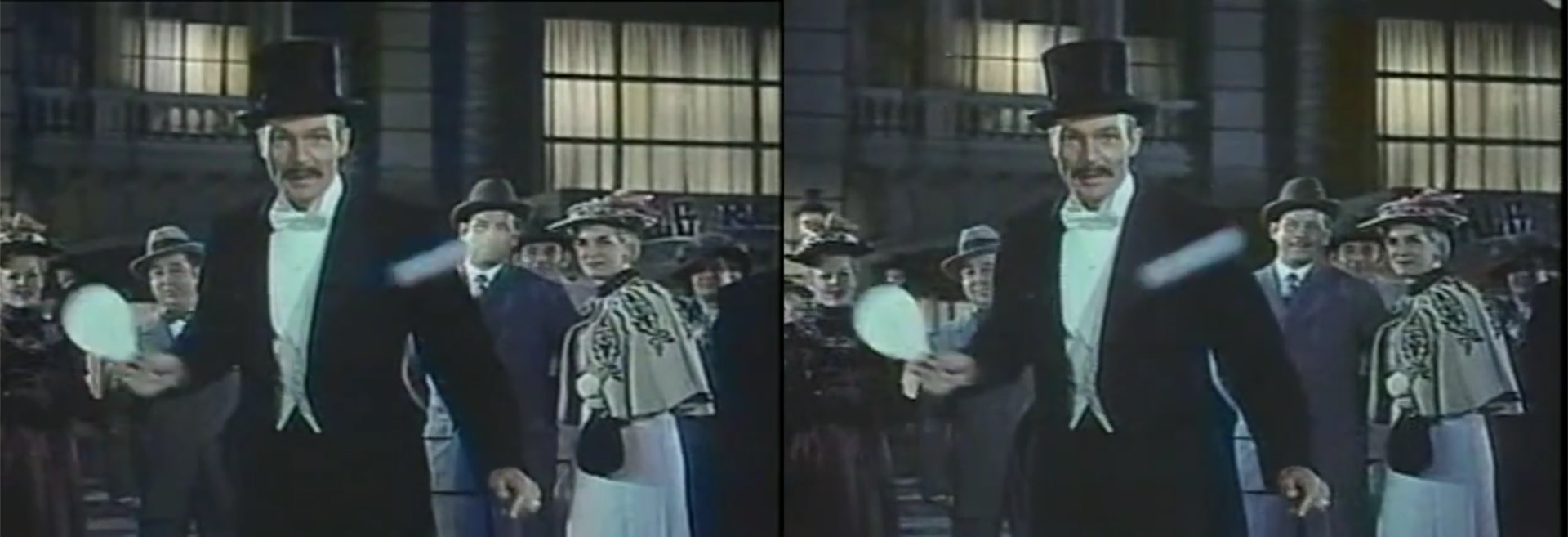
Figure 1. House of Wax, jokari scene
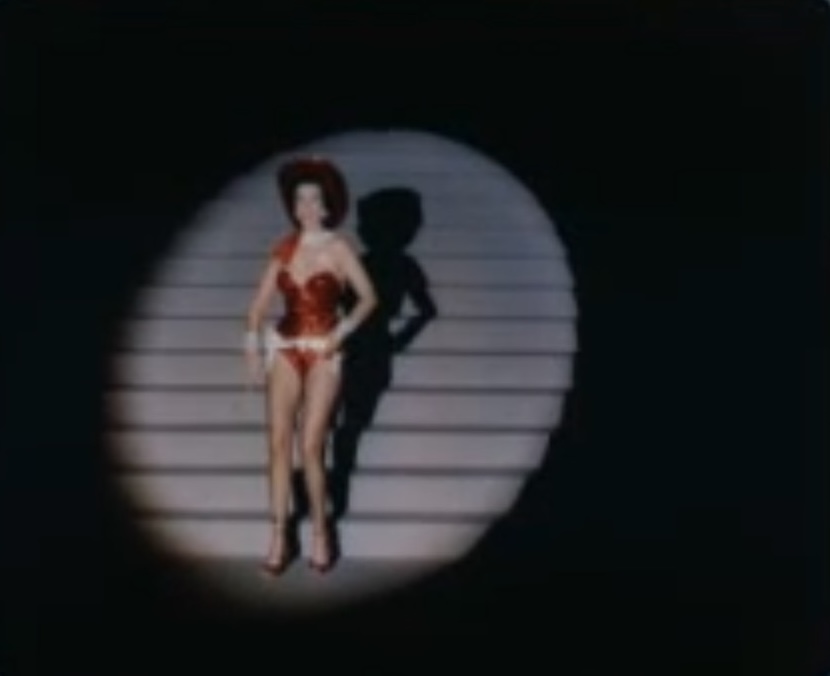
It takes a lot of imagination and also aesthetic discovery to find specific stereoscopic 3D elements that can surprise the audience with a new visual experience or a new definition of of space. Such an example can be found in the movie “The French Line”. Here, the performance on stage is recorded using a spot light commonly used in variety performances. The high amount of contrast makes the area surrounding the dancers seem completely black. As a side-effect this structure less black space figures as a round shaped floating window. It allows the dancer to enter far into negative parallax. This negative parallax would have caused a significant window violation if the light effect would not have been applied in this way. Figure 2 shows a frame of the dance scene with the spot light.
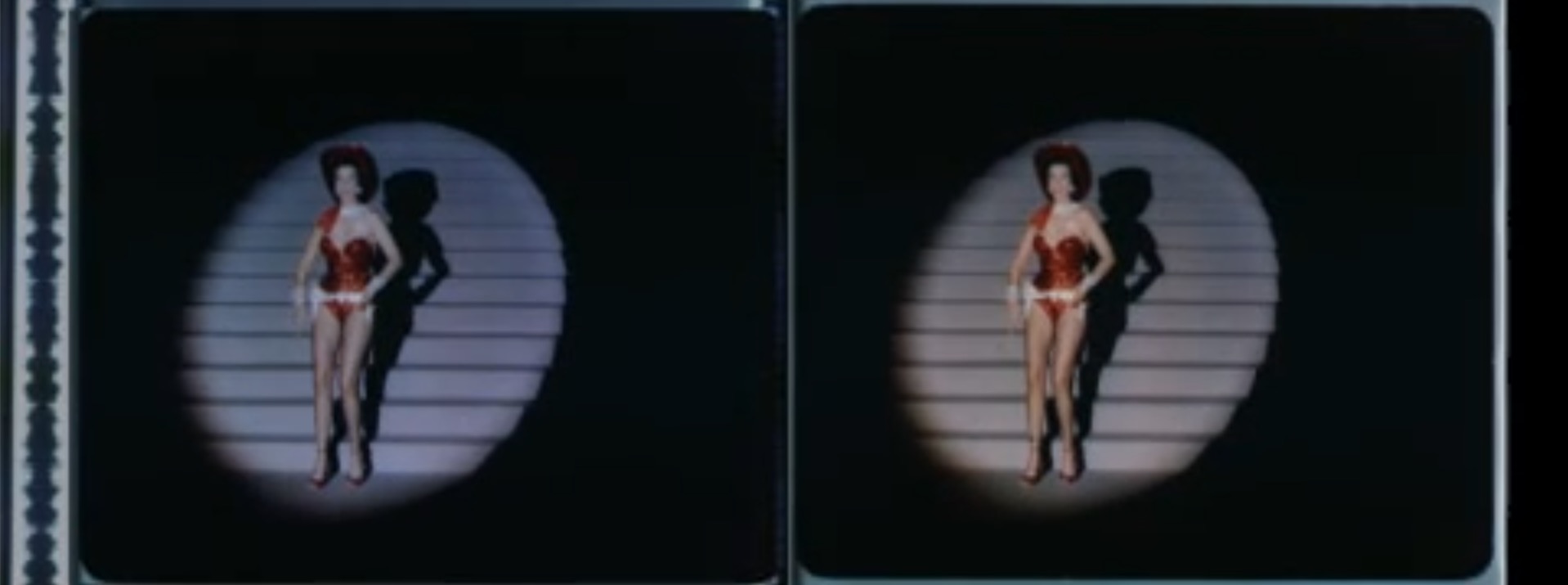
Figure 2. The French Line, Spot light dance scene
Many other examples of this types of influence of stereoscopic 3D on the scenario and story telling can be found in the great number of 3D movies. They show to which degree the film makers developed an affinity and sensitivity with the medium. These influences are usually a voluntary choice made by the director, cinematographers and actors. However, there is also another type of aesthetics; not always directly influenced by the film makers but a consequence of technical choices and physiologic properties.
One of the effects of binocular vision in stereoscopic cinema, is the different representation of space depending on the position of the viewer: A person sitting in the first row will observer a different stereoscopic space than the person sitting in the back of the cinema. While the audience sitting in the front observes a rather compressed space on the cinematographic movie, the audience in the back of the theater can observe a rather stretched and exaggerated depth. Film makers must abandon the idea that the observation of a stereoscopic 3D movie is the same on every seat for everybody. In fact, every spectator will have a slightly different experience3. Figure 3. demonstrates how the effect of roundness of an object can vary with the distance to the screen.
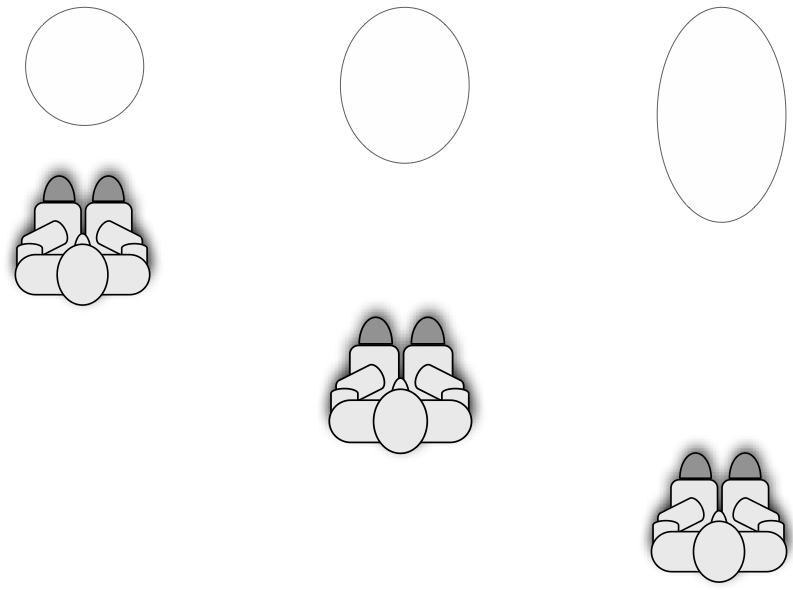
Figure 3. Roundness and viewer distance
Among many others there are also strong influencers of the stereoscopic 3D space among the camera parameters. While some devices and rigs allow these parameters to be changed, others more simple ones have fixed and predetermined settings with shape the stereoscopic 3D space recorded with the movie. This is for example the case for stereoscopic Electronic News Gathering cameras (ENG) or semi-amateur stereoscopic recording equipment. Covering all possibilities and creative issues would be beyond the scope of this article4. To demonstrate the effects of the camera technology two significant examples of features will be exposed:
1.2 Stereoscopic 3D Aesthetics in Camera Choice
A frequently recurring debate in the preparation and pre-visualization of stereoscopic 3D movies is vast uncertainty about the proper use of focal length. As well as in photography and in flat 2D cinema focal lengths are used to either enlarge or stretch the space. They have different aesthetics properties. Portrait and landscape photography have developed their own aesthetics with appropriate focal lengths that enhance certain object features or comply to a common beauty ideal.
Similar to the viewer position in the cinema described earlier, the focal length has a direct a controllable impact on the roundness of objects5. Figure 4 shows in an exaggerated manner how wide angle and tele can either stretch or compress the space.
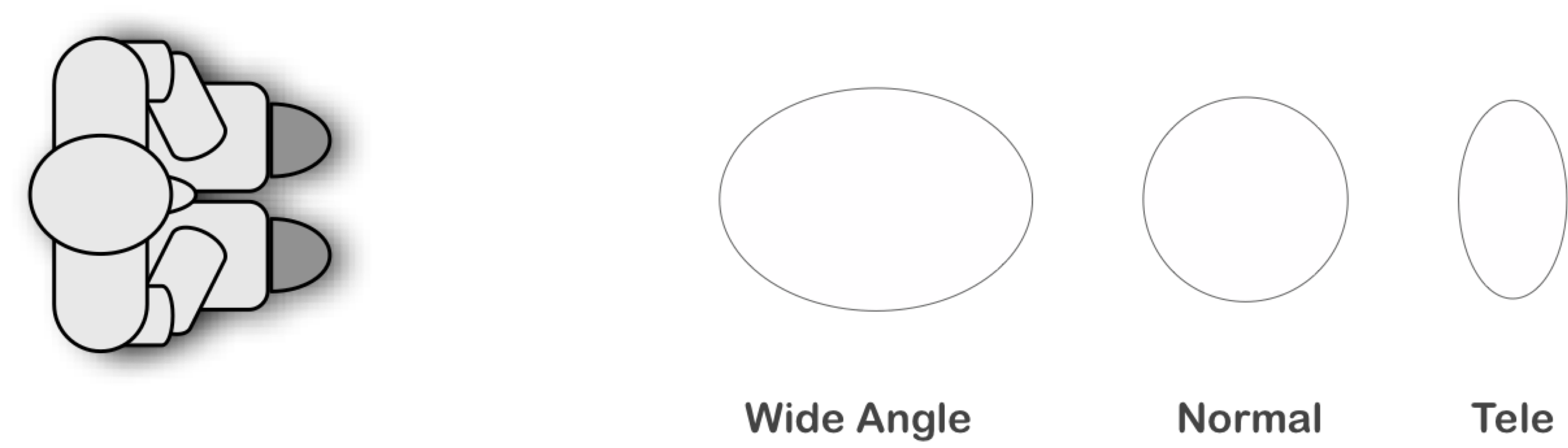
Figure 4. Influence of focal length on roundness
Different stereographers might make different recommendations for focal lengths suitable for stereoscopic 3D applications. One wide spread hypothesis is that the short and wide angle focal lengths are particularly adapted to 3D. The common reasons are usually a larger depth of field and also an over proportional stretching of the space. However, focal lengths below normal focal come often at a price of potentially very empty looking images. Besides, they have the side effect, that the point where stereoscopy ends is also potentially reduced. In the other hand, using longer focal lengths tend to significantly compress the space. This phenomenon is called cardboard effect6. They are also able to contribute to the reduction of depth of field. This technique is very appreciated among cinematographers and is one of the features that makes cinema movies different from the aesthetics of smart phone and amateur videos. The following two examples show how the use of focal lengths influences the look and aesthetics of a stereoscopic 3D movie. Figure 5 depicts the wide space and deep focus opened by a wide angle shot in the dancing movie Pina. Figure 6 exhibits a detail close up with short depth of field and very compressed space.
|
Figure 5. Pina, Dancing scene |
Figure 6. The Forbidden Girl, detail shot |
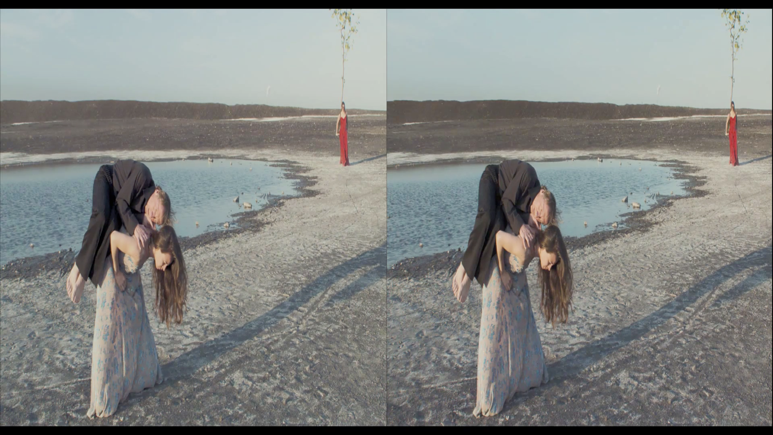
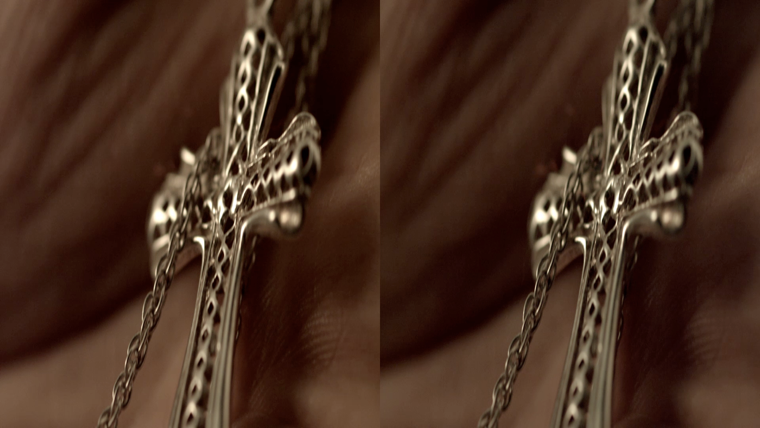
The two examples demonstrate, that there is no such thing as an a priori appropriate focal length for stereoscopic 3D movies. Wide angle shots may have few advantages, but more important is the function of the shot in the scene and its value for the story telling. Attributing a high number of constraints on the camera choices might be a reason why many cinematographers and directors could perceive the aesthetics of 3D movies as a fallback behind the achievements of flat 2D movies paired with a loss of story telling freedom.
While the issue on focal lengths extends an antithetical question that is similar in flat 2D movies another aspect relating to space is immanent and unique to stereoscopic movies. It is the setup of the distance between the two optical axis that are responsible for recording two separate view points necessary to create the stereoscopic 3D effect. Many systems have emerged on the market each with its own advantages or inconveniences7. Since time management, crew size and budget are crucial to the film set, a principal concern of many production companies is the increased operation time due to the fact of using two cameras instead of a single one. Therefore various innovations have emerged to improve the handling during shooting and even compact models that can almost be handled as easy as a single camera were developed. While the simplification is often put forward to reduce the production cost it also is a factor that can deeply affect the aesthetics of stereoscopic 3D movies. Figure 7 exhibits the schematic setup of two of the most popular camera systems: a twin camera system and beam splitter rig system.
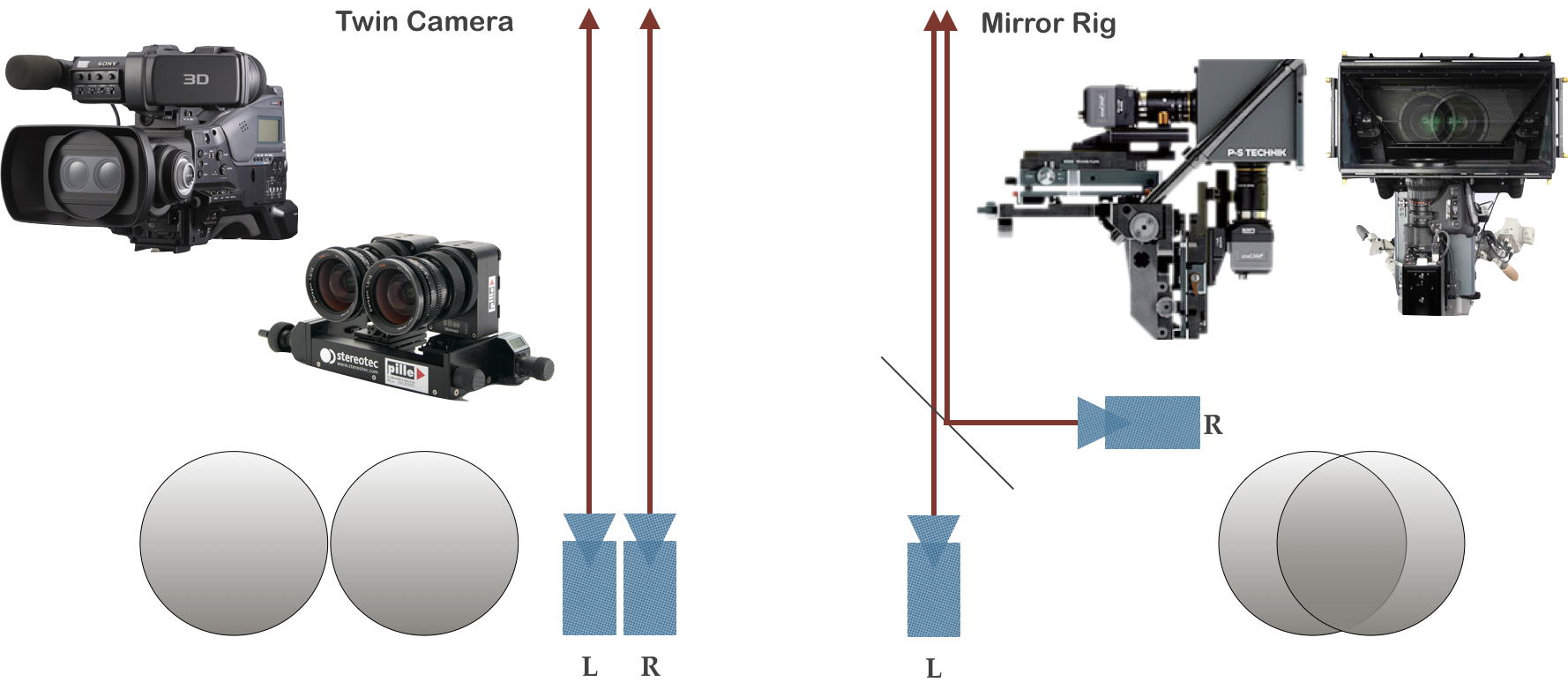
Figure 7. Left: Twin Camera - Right: Beamsplitter Rig
As with the focal length there is no ideal a priori choice of a setup as such. The principal difference lays in the interaxial distance that can be achieved. The Twin Camera or generally Side by Side systems allow very large interaxials, but are limited to a minimum where the two camera bodies or lenses touch each other. This limitation can be overcome by the use of beam splitter rigs that redirect the optical axis over a semi transparent mirror and can produce interaxials that are smaller than the lens diameter.
The question of interaxials does not occur in flat 2D movie production. However, in stereoscopic 3D movie making it is a crucial setting with a strong influence on the movie quality. Inappropriate setups can be responsible for many cases of eye strain and dizziness among the audience. In stereoscopic movie production it is common practice to adapt the interaxial to the recorded scenes, considering the large magnifications that the images are subjected to in 3D cinemas. Performing the correct interaxial setups is an art in itself and is covered by a vast amount of literature on stereoscopy8. For reasons of simplicity only an example will be mentioned showing the challenges that sometimes have to be met in stereoscopic movie production.
1.3 Example of 3D-Cinema-Specific 3D Aesthetics
Let’s imagine a scene of a woman standing in front of a mountain. This example represents a frequent case in stereoscopic 3D. If we consider the mountain at a distance of a couple of kilometers we must admit that our bare eyes are not able to discern any dimensionality at the horizon. This is because our physical eye distance of approximately 6.5cm does not create viewpoints that are far enough to observer significant changes in perspective in the distance of several kilometers. The limits of our natural vision make that we perceive far objects flat and without stereoscopic depth9. If we wanted to see the dimensionality of the mountains far away, we would need to put ourselves in the perspective of a giant, with an eye distance of several meters. This kind of shots are usually done by means of DSL cameras at far distances and synchronized with electronic remote controls. However, when the two cameras are so far apart, the girl - as mentioned in the example - is very likely to appear only partially in the image. In order to cover the person close to the cameras, the cameras cannot be placed meters apart. Close objects require a different interaxial distance than far objects. The solution is usually a compromise, to chose a small interaxial to record the girl in the foreground with a small interaxial and to sacrifice the stereoscopic depths in the far away background. While this coincides in many cases also with the human perception, it can be the desire of stereoscopic movie makers to provide a stereoscopic sensation over the whole depth of an image. In order to achieve this, the background and foreground are recorded using different interaxial distances and carefully composited together in post production. Figure 8 shows a schema of the camera setup for foreground and background.
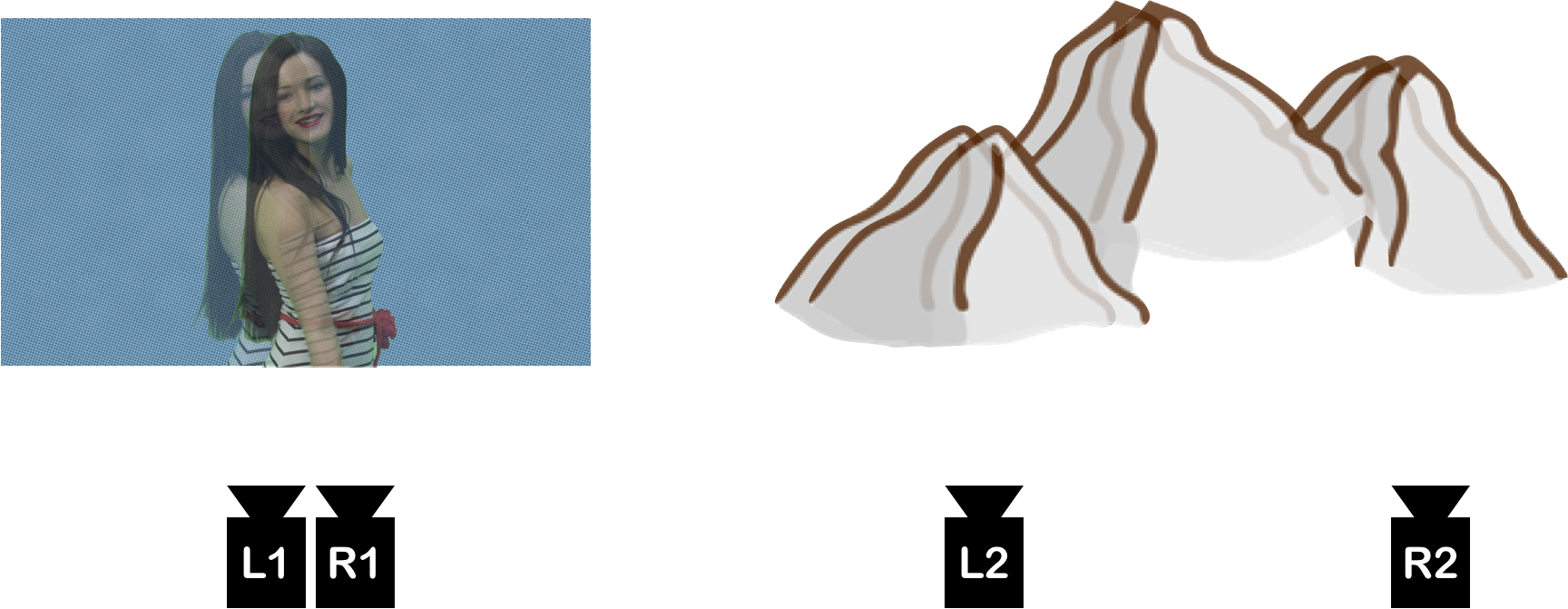
Figure 8. Interaxial L1-R1 small for foreground, L2-R2 large for background
This demonstrations reveal how filming in stereoscopic 3D is not a process of copying a space, but it involves a significant number of decisions on how to redefine, represent and recreate the space for the audience.
2 Conclusion
This article demonstrated that a large number of factors can influence the look and aesthetic of a stereoscopic 3D movie. Stereoscopy regularly receives a certain justification by influencing the screenplay and the storytelling. However, also a large number of technical choices have a substantial impact on the aesthetics of stereoscopic 3D movies. Among many other technical features the focal length and the interaxial distance contribute to a large extent to the shaping of depth and stereoscopic aesthetics. Through the above mentioned example of a person standing in front of a mountain the article disclosed how stereoscopic camera technology can create spaces beyond the human perception.
As a conclusion the stereoscopic aesthetic and 3D space can be considered as an artistic creation inspired by the creators of stereoscopic movies. The different technical features of stereoscopic camera systems work together to present an additional dimension to cinema and storytelling.
April 2019. Alaric Hamacher
Footnotes
Stefan Drößler, ‘Geschichte des 3D-Films’, AugenBlick. Konstanzer Hefte zur Medienwissenschaft, 2015, 93–104 <http://dx.doi.org/10.25969/mediarep/3624>.↩︎
Donghyun Kim and Kwanghoon Sohn, ‘Visual Fatigue Prediction for Stereoscopic Image’, IEEE Transactions on Circuits and Systems for Video Technology, 21.2 (2011), 231–236.↩︎
K. Benzeroual, R. S. Allison, and L. M. Wilcox, ‘Distortions of Space in Stereoscopic 3D Content’, in SMPTE 2nd Annual International Conference on Stereoscopic 3D for Media and Entertainment, 2011, pp.� 1–10 <https://doi.org/10.5594/M001420>.↩︎
Benoît Michel, ‘La Stéréoscopie Numérique’, Tourner, Éditer, Diffuser, Imprimer, Projeter., Eyrolles, 2011.↩︎
Mikko Kytö, ‘Effect of Camera Separation on the Viewing Experience of Stereoscopic Photographs’, Journal of Electronic Imaging, 21.1 (2012), 011011 <https://doi.org/10.1117/1.JEI.21.1.011011>.↩︎
H. Yamanoue, M. Okui, and I. Yuyama, ‘A Study on the Relationship between Shooting Conditions and Cardboard Effect of Stereoscopic Images’, IEEE Transactions on Circuits and Systems for Video Technology, 10.3 (2000), 411–16 <https://doi.org/10.1109/76.836285>.↩︎
Alaric Hamacher and others, ‘3D UHDTV Contents Production with 2/3-Inch Sensor Cameras’, in Stereoscopic Displays and Applications XXVI (International Society for Optics and Photonics, 2015), , 939105.↩︎
F. Zilly, J. Kluger, and P. Kauff, ‘Production Rules for Stereo Acquisition’, Proceedings of the IEEE, 99.4 (2011), 590–606 <https://doi.org/10.1109/JPROC.2010.2095810>.↩︎
George Malcom Stratton, ‘A Mirror Pseudoscope and the Limit of Visible Depth.’, Psychological Review, 5.6 (1898), 632–38 <https://doi.org/10.1037/h0070435>.↩︎