Distributing VR180 Films
Five routes from a finished immersive film to viewers in a headset
VR180 distribution, DeoVR, YouTube VR, Apple Immersive Video, Apple Vision Pro, Galaxy XR, Meta Quest
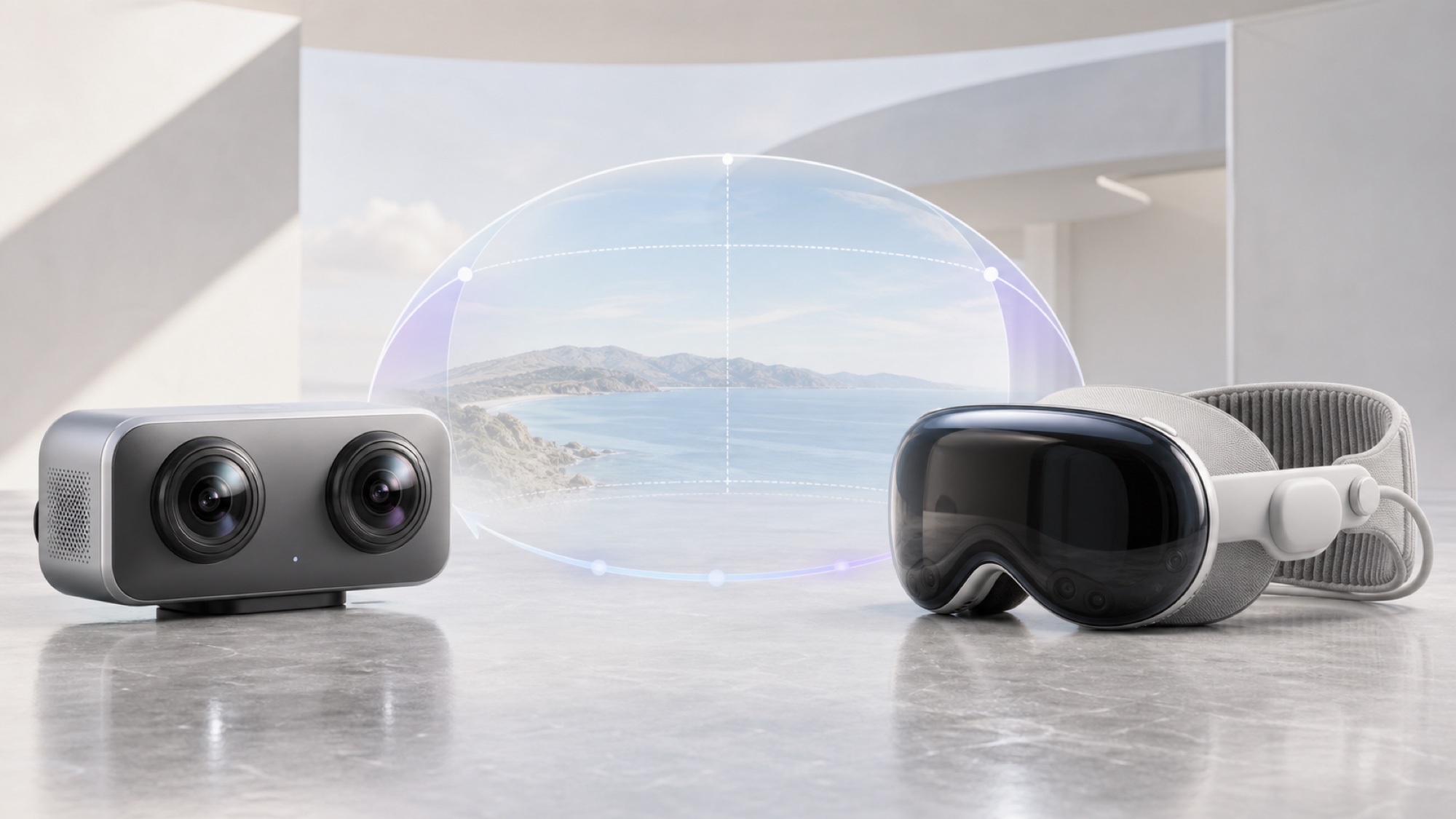
From master file to audience
Finishing a VR180 film is only half of the work. The distribution platform determines how easily people discover it, which headsets can play it, whether 8K quality survives streaming, and how the filmmaker can earn money.
There are five useful routes today. A public film may use several of them at once: YouTube for reach, DeoVR for a headset-first audience, and a dedicated application for the highest control over quality, presentation, and sales.
| Route | Reach | Publisher control | Typical business model |
|---|---|---|---|
| DeoVR | Multiple headset families | Medium | Free, Premium, creator monetization |
| YouTube | Largest general audience | Low | Free/ad-supported, channel monetization |
| Apple TV Immersive | Curated Vision Pro audience | Low; partnership required | Apple-curated catalog |
| Dedicated content app | Chosen headset platforms | High | Free preview, purchase, subscription, sponsorship |
| Headset app stores | Apple, Google/Android XR, Meta | High, but separate releases | App sale, in-app purchase, subscription, free/sponsored |
1. DeoVR: the established VR video portal
DeoVR is one of the longest-running, established portals built specifically around VR video rather than ordinary flat video. Viewers can browse the website or use the DeoVR player on major headsets, including Meta Quest, Pico, SteamVR, and Apple Vision Pro. It supports VR180, 360°, high resolutions, high frame rates, and headset-specific features such as passthrough.
The catalog combines free public videos with Premium videos. A free viewer can stream the open portion of the library and use DeoVR as a capable VR player. A Premium subscriber gains access to creator-designated Premium content and additional platform benefits. DeoVR’s precise subscription prices and promotions change, so the current offer should be checked on the Premium page rather than embedded permanently in a film’s marketing material.
For filmmakers, DeoVR offers a channel, direct upload, analytics, and monetization inside an audience that already understands immersive video. A creator can leave a film free to maximize reach or place eligible work in the Premium catalog and receive viewing-based revenue. DeoVR also operates Creator Drive, with a small free storage allowance and paid storage tiers for larger libraries.
Best use: specialist VR discovery, high-quality headset playback, and a mixture of free promotion and paid catalog content.
2. YouTube: open reach and the new immersive apps

YouTube remains the easiest way to put a VR180 film in front of a worldwide audience. A properly encoded stereoscopic equirectangular master with the correct spatial metadata can be uploaded like another video. YouTube then produces adaptive streaming versions and presents the film in a compatible immersive player.
The platform is no longer limited to browser playback on Apple Vision Pro. YouTube for visionOS launched in February 2026 with a Spatial discovery area for 3D, VR180, and 360° material. It supports both M2 and M5 Vision Pro models, while 8K playback is listed for the M5 model. YouTube is also deeply integrated into Galaxy XR and Android XR, and the YouTube VR application remains an important route on Meta Quest.
Useful channels for understanding the range of VR180 publishing include:
- Hugh Hou, with camera tests, production education, and immersive travel;
- CreatorUp, covering immersive cameras, post-production, and platform workflows;
- AirPano VR, with destination and aerial immersive films;
- Slice of life VR, focused on high-resolution observational VR180; and
- 3D Film Lab, with stereoscopic and immersive production workflows.
Availability is not identical for every viewer. Individual uploads may be geo-restricted because of music, sports, film, or broadcast rights. They can also be hidden behind age verification, account age, parental controls, or restricted mode when the subject is unsuitable for children. Local classification rules and internet regulation can affect whether a film is discoverable or playable even when the platform itself is available. YouTube is restricted or unavailable in some jurisdictions, including mainland China, so a global distribution plan needs an additional local platform or application rather than assuming that one YouTube link reaches everyone.
Best use: public discovery, searchable educational or promotional material, trailers, and films intended to reach several headset ecosystems with one upload.
3. Apple TV and Apple Immersive Video
On Apple Vision Pro, Apple’s own premium route is the Vision area of the Apple TV app. It brings together 3D movies and Apple Immersive Video: Apple’s high-end stereoscopic 180° format with Spatial Audio.
The catalog includes documentary, travel, sports, music, and scripted work. Examples include Boundless, Wild Life, Elevated, Submerged, The Weeknd: Open Hearts, Metallica’s immersive concert, and Bono: Stories of Surrender. In 2025 and 2026 Apple also expanded the catalog through outside producers and broadcasters.
This is a curated distribution channel, not a self-service upload portal. A filmmaker cannot create an Apple TV account and publish an Apple Immersive master in the way they can upload to YouTube or DeoVR. Distribution normally requires a commissioning, production, broadcaster, or platform relationship and an Apple Immersive Video delivery workflow.
Regional rights matter here as well. Apple states that title availability varies by country or region. In mainland China, selected Apple Immersive titles have been distributed through Migu Video and Tencent Video instead of the same Apple TV route used in many other territories. The catalog may therefore differ even when the headset hardware is identical.
Best use: commissioned or partner-led premium productions designed around Apple Vision Pro and Apple Immersive Video quality.
4. Dedicated applications: a branded home for the content
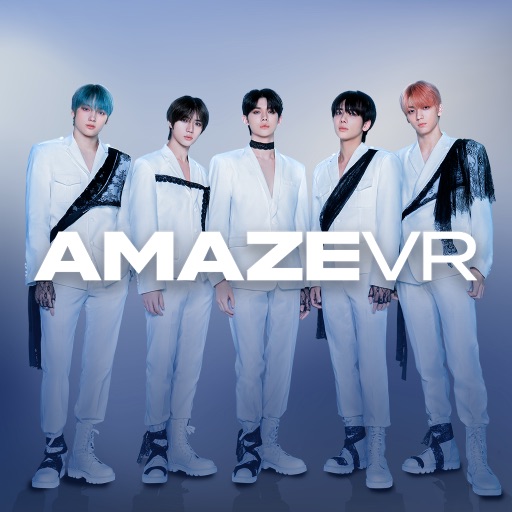
A dedicated headset application gives a producer much more control than a video portal. The app can define its own theater, menus, downloads, interaction, spatial audio behavior, pricing, analytics, and release schedule. It can also combine video with hand tracking, volumetric graphics, subtitles, or interactive scenes.
The K-pop and concert application the distribution model is often associated with is properly named AmazeVR Concerts: Immersive 3D. It includes artists such as TOMORROW X TOGETHER, Megan Thee Stallion, Avenged Sevenfold, T-Pain, Zara Larsson, and UPSAHL. The commercial model is unusually clear: one song from each artist is free, while a viewer can buy the complete concert without taking out a subscription. AmazeVR also supports Meta Quest, although catalog and release timing can vary between platforms and countries.
For a specifically Korean example, VENTA X: Showcase App presents free 8K stereoscopic K-pop performances on Vision Pro, including work with YUQI, LEE CHAE YEON, KWON EUN BI, and KISS OF LIFE. Spatial Film illustrates another model: an independent application used to distribute native immersive films and experiences outside Apple’s own curated Apple TV catalog.
The disadvantage is fragmentation. Every supported operating system needs an application build, store review, testing, entitlement and purchase setup, and long-term maintenance. A dedicated app is most convincing when the producer has a continuing catalog—not only one short film.
Best use: concert catalogs, festivals, museums, branded series, paid experiences, and projects that need interaction or exact control over playback.
5. The headset stores: Apple, Google/Android XR, and Meta
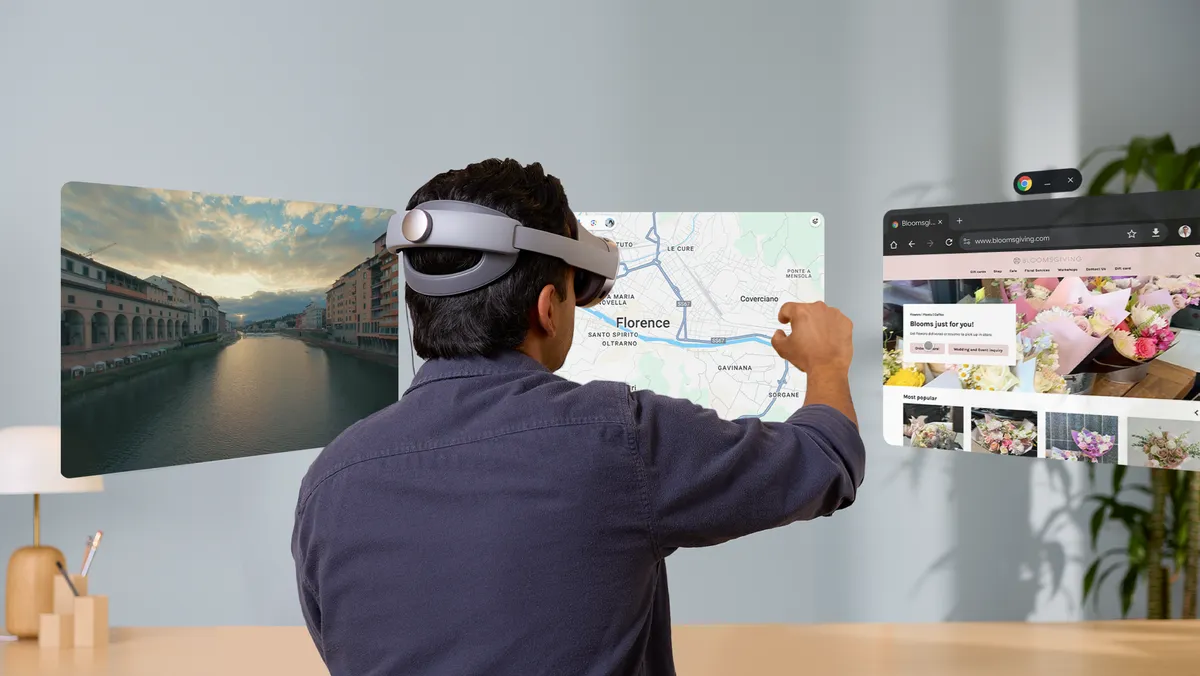
A dedicated application ultimately reaches viewers through one or more headset stores:
- the Apple App Store for Vision Pro distributes native visionOS applications;
- Google Play is the application channel for Android XR devices such as Samsung Galaxy XR; and
- the Meta Horizon Store distributes applications for Meta Quest headsets.
The same film can be released on all three, but the application and video pipeline are not automatically portable. visionOS can use Apple’s immersive media frameworks and MV-HEVC-based delivery. Android XR supports open standards such as OpenXR and WebXR and provides native YouTube access to VR180 and 360° content. Meta Quest has a mature installed base, YouTube VR, DeoVR, Meta’s own media experiences, and many specialist applications.
For a filmmaker, the practical decision is whether to build one cross-platform catalog app, commission separate native apps, or use a specialist distribution partner. A store app can be free, paid once, supported by in-app purchases, funded through subscription, or sponsored. The filmmaker also controls whether the movie streams, downloads for offline use, or combines both methods.
Store territory is not the same as viewer eligibility. An application may be available in a country while a concert or film inside it remains unavailable because of licensing, local regulation, music rights, or an existing theatrical window. Content that is unsuitable for children may also require an age-rated store listing, an adult account, age verification, a parental-control check, or an age gate inside the application. Territory and age-access rules therefore belong in the content service as well as in the store listing.
Best use: controlled commercial distribution across selected headset families, especially when the content is part of a growing library.
A sensible release pattern
For most independent VR180 productions, the strongest plan is layered:
- Release a trailer or selected sequence on YouTube for discovery.
- Publish the complete headset-oriented film on DeoVR, either free or Premium.
- Use a dedicated application when the catalog, rights, interaction, or premium image quality justifies the development work.
- Treat Apple TV Immersive as a curated partnership route rather than a normal upload destination.
- Test every release on actual Vision Pro, Galaxy XR, and Meta Quest hardware included in the distribution plan.
Platform support, catalog availability, age ratings, parental controls, subscriptions, and app-store listings change independently. Verify the viewer’s country, permitted age group, account requirements, and target headset before publishing campaign links. This article reflects the distribution landscape in July 2026.